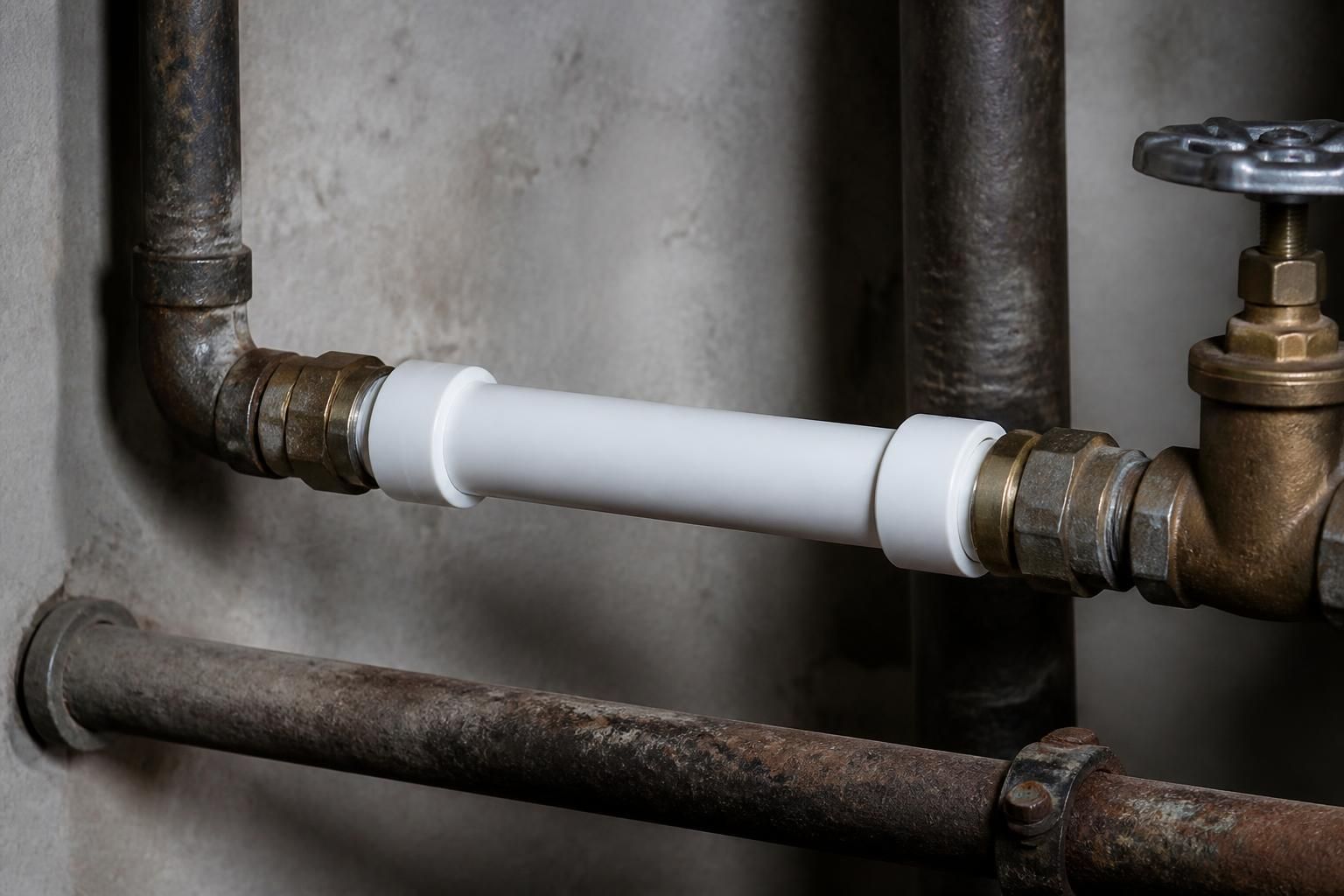
Brown stains on faucets, flaky pipe surfaces, or water that tastes off can point to pipe corrosion. If you have spotted a damp cabinet, a pinhole leak, or recurring pressure changes, the pipe may be breaking down from the inside and should be checked soon.
T.F. & Sons Plumbing and Heating helps homeowners across NY with corroded pipe repair and replacement that matches the condition of the line, the layout of the home, and the level of damage already present. We look at the visible symptoms, trace the source, and recommend a clear next step before a small problem turns into a larger repair.
Corrosion does not always start with a major leak. Many homeowners first notice small changes at a sink, tub, basement line, or water heater connection. These changes may seem minor at first, but they often point to pipe walls thinning or buildup forming inside the line.
If one or more of these issues keep showing up, a repair visit can help determine whether the pipe can still be restored or whether replacement is the safer path.
Corrosion eats away at the inside and outside of pipe material over time. Once that wear starts, the line can become thinner, more brittle, and more likely to leak at joints or weak spots. In many homes, the first sign is not a burst pipe but a series of small frustrations that keep returning.
Rust and internal buildup can restrict water movement. That restriction may create lower pressure at a shower, slow fixture fill times, or uneven performance from one part of the home to another. If buildup gets severe, sections of the line may need to be removed rather than patched.
Exposed piping can corrode from moisture, age, or contact with surrounding materials. You may notice pitting, surface scaling, or damp spots near fittings. These are signs that the pipe is losing strength and may not hold up much longer under normal use.
Not every corroded pipe calls for a full replacement. The right choice depends on where the damage is, how much of the line is affected, and whether the pipe still has enough solid material left to support a repair.
We explain what we find, what can be fixed, and what may need to come out so you can make a clear decision without guesswork.
When we handle corroded pipe repair and replacement for a home in NY, we start with the symptoms you have noticed and inspect the affected area for visible wear, staining, and leak points. From there, we trace the issue back to the source so the repair addresses the actual problem rather than just the surface sign.
T.F. & Sons Plumbing and Heating keeps the process straightforward. If a section can be repaired, we make the fix cleanly and check the surrounding pipe for stress or additional wear. If replacement makes more sense, we remove the damaged portion and install new piping suited to the system and the home’s current setup.
We look at exposed piping, fittings, and nearby fixtures to identify where the corrosion began and whether other sections show the same wear.
For limited damage, repair may involve replacing a failing section, correcting a weak connection, or addressing a leak at a corroded joint.
When the pipe has reached the point where patching is not a smart long-term choice, we replace the damaged run and reconnect the line with care.
Corrosion can show up in several parts of a home’s plumbing. Some spots are more visible, while others are tucked away and only get noticed after a leak or water quality change.
If the corrosion is tied to a hidden section, we focus on locating the affected run and opening only what is needed to reach it.
Corroded piping rarely improves on its own. Even if the leak is small today, the weakened area can widen, create more staining, or begin affecting nearby materials. Acting early can help limit water damage, reduce repeat repairs, and keep the problem from spreading to adjacent pipe sections.
Waiting also makes the repair more complicated. Once corrosion advances, fittings can become harder to separate, pipe walls can crumble during removal, and more of the line may need replacement. Addressing the issue sooner gives you more options and usually a cleaner result.
Homeowners often want to know how a corroded pipe visit unfolds. We keep it direct so you know what we are checking and why.
That process helps keep the job focused on the actual cause rather than a temporary patch.
Corroded pipe problems can feel confusing because the symptoms often show up in small ways first. A homeowner may notice an odd stain at one faucet, then see the pressure drop at another, and wonder whether the problems are connected. They often are.
Homes across NY vary widely in age, layout, and prior pipe work, so the right solution depends on what is happening inside the line now. Some piping still has enough strength for a targeted repair, while other sections are too worn for a short-term fix. We help sort that out with a practical look at the condition of the pipe and the surrounding system.
Look for rust-colored water, surface pitting, flaking metal, stains near joints, and small leaks that keep coming back. Those signs often point to corrosion rather than a one-time fixture problem.
Yes. A small leak can be the first place where weakened pipe walls start to fail. If the area has visible rust or repeated drips, the damage may extend beyond the spot you can see.
No. Some sections can be repaired if the damage is limited and the surrounding pipe is still sound. Replacement is usually better when the pipe is heavily worn or the same issue keeps returning.
It can. Corrosion may cause discoloration, taste changes, or sediment at the tap. If water looks or tastes different, the pipe should be checked.
Yes. One visible problem may come from a single branch line, a fitting, or a connection near that fixture. A focused inspection helps pinpoint whether the issue is isolated or part of a larger run.
Hidden corrosion can still be found through signs such as staining, damp surfaces, and pressure changes. Once the affected area is identified, the needed access work can be planned around that section.
If you are seeing rust stains, leaks, or discolored water, contact T.F. & Sons Plumbing and Heating for corroded pipe repair and replacement serving NY. Call +15166695558 or email service@tfsplumbing.com to set up a visit at our Massapequa location. We work with homeowners who need a clear answer, a solid repair, or a full replacement when the pipe has reached the end of its useful life.

Book Your Visit
Tell us what is happening at your home, and we will help you understand the next step. From a leaking pipe to a boiler issue or water heater concern, we focus on practical solutions and clear updates.