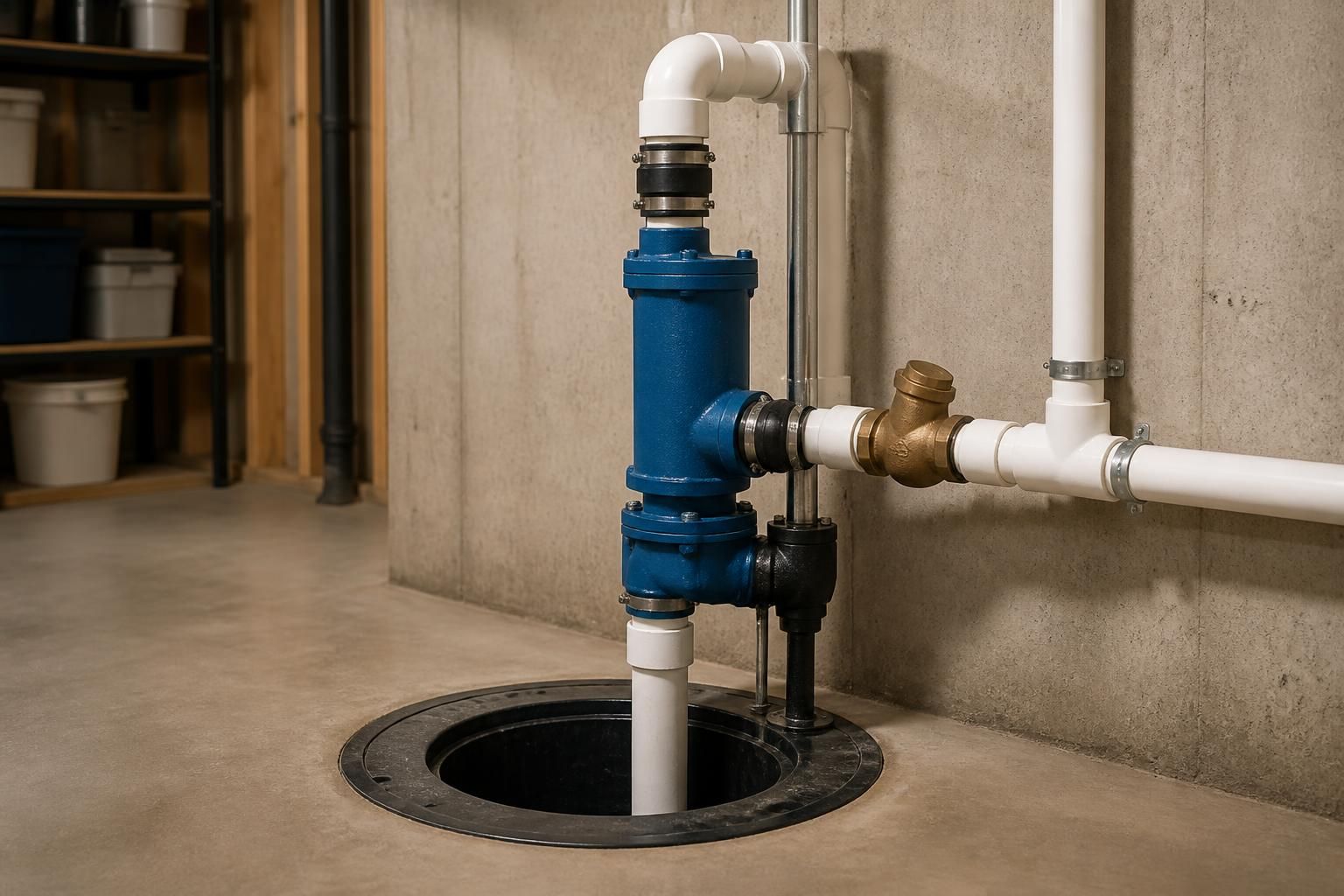
A sewage odor near the basement, a toilet that gurgles after use, or a pit that keeps cycling can point to ejector pump trouble. When wastewater is not moving the way it should, the problem usually gets louder, messier, and harder to ignore.
T.F. & Sons Plumbing and Heating helps homeowners across NY with ejector pump installation and repair that matches the layout of the home and the demands of the drain lines. If the pump is failing, we can diagnose the cause, replace worn parts, or install a new unit so the system can move waste away from lower-level fixtures again.
Ejector pump problems often show up before a full breakdown. Catching the signs early can help limit damage to the pit, basin, and nearby finishes.
If any of these sound familiar, it is worth having the system checked before the problem spreads to floors, walls, or stored items nearby.
Ejector pump systems contain several parts that need to work together. A fault in one area can affect the entire setup, so our repairs focus on the full assembly, not just the symptom.
If the motor is weak, seized, or short cycling, the pump may not push waste up and out of the basin. We inspect the motor, wiring, and switch behavior to find the source of the failure.
A stuck float or failed switch can stop the pump from starting at the right time. That often leads to rising water levels, odor concerns, or overflow risk inside the pit.
Blockage, wear, or loose connections on the discharge line can limit how well the pump moves waste away from the home. We trace the line and check for obstructions or damaged sections.
Worn seals, lid issues, or a damaged basin can let odors escape and reduce the reliability of the system. These details matter just as much as the pump itself.
When a pump has failed beyond repair, or a basement bathroom is being added, a new ejector pump installation can be the right solution. We help select and install a unit sized for the home’s needs and the expected wastewater load.
For homes that need a replacement, the process usually includes removing the old equipment, checking the basin, confirming discharge routing, and setting the new pump with the right controls and connections. For new installs, the layout has to support the fixtures, basin depth, and discharge path from the start.
T.F. & Sons Plumbing and Heating keeps the process straightforward so you know what is being checked and why. The goal is to identify whether the issue is mechanical, electrical, or related to the drain path.
That approach keeps the work focused and helps homeowners understand what was corrected before the job is wrapped up.
Some ejector pump problems come from age, while others come from what the system has had to handle over time. Knowing the common causes can help you spot trouble sooner.
Motors, switches, and seals wear down after repeated use. A pump that has served the home for years may start to run louder, cycle irregularly, or lose lifting strength.
Waste, debris, and material that should not enter the basin can create strain and reduce performance. A blockage may not stop the pump right away, but it can make the system work harder than it should.
When a pump is undersized for the number of fixtures or the volume of wastewater, it may struggle from the start. In that case, replacement with the correct setup is often the better fix.
Homeowners often ask whether a struggling ejector pump should be repaired or replaced. The answer depends on the condition of the motor, basin, switch, and discharge assembly, along with how often the problem has returned.
Repair makes sense when the issue is limited to a switch, float, seal, connection, or other single part. Replacement is usually the better route when the motor is worn out, the pump is failing repeatedly, or the system no longer fits the home’s demands.
We can talk through the signs, explain what we found, and help you choose the path that makes sense for the system you have now.
Lower-level fixtures depend on an ejector pump to move wastewater away from the basement or below-grade area. When that pump fails, the whole space can become hard to use and unpleasant to be around.
Homeowners call T.F. & Sons Plumbing and Heating for clear answers and work that is focused on the source of the issue. Whether the job calls for a repair or a fresh installation, we aim to leave the system easier to trust and simpler to monitor.
If your home in NY has a basement bathroom, laundry setup, or another fixture that relies on an ejector pump, timely service can help you avoid larger cleanup and restore normal use of the space.
An ejector pump lifts wastewater from lower-level fixtures and sends it to the main drain line so it can leave the home.
Continuous or repeated running can point to a stuck float, a switch issue, a discharge blockage, or a pump that is losing strength.
Sometimes it can, but noise often means the motor, impeller, or another internal part is wearing out and should be checked.
Odors can come from a loose lid, failed seal, venting concern, or wastewater sitting where it should have been moved out of the basin.
Not always. If the current pump is sound and suited to the fixture load, a repair may be enough. A new installation is needed when the setup is missing or the old pump no longer fits the space.
If the pump keeps failing, the lid does not seal well, or the basin shows wear, cracks, or odor escape, the basin should be inspected along with the pump assembly.
T.F. & Sons Plumbing and Heating serves NY homeowners from Massapequa and nearby communities with ejector pump installation and repair that is practical, clear, and focused on the problem at hand. For help, reach out by phone at +15166695558 or by email at service@tfsplumbing.com.

Book Your Visit
Tell us what is happening at your home, and we will help you understand the next step. From a leaking pipe to a boiler issue or water heater concern, we focus on practical solutions and clear updates.